
Intent
At Monkshouse Primary School our priority is to instill a love of reading and learning in all our children. From the very first day children start at our school, they are immersed in a language rich learning environment where language and literature drive and secure all aspects of the curriculum. The intent of Phonics teaching is to equip pupils with the necessary skills and knowledge to become confident and proficient readers and writers.
1. Clear Aims and Objectives
At Monkshouse Primary School, we use the DfE approved programme Sounds-Write to teach phonics. This programme is structured and progressive, with clear aims and objectives. The principles are in line with our school ethos in being a metacognitive school. It establishes high expectations for every child, whilst ensuring that cognitive load is optimised.
2. Sequential Instruction
The Sounds-Write programme ensures systematic progression and pacey instruction, using a planning approach of review, teach, practice and apply and a multi-sensory, structured lesson format. Children apply their skills through shared reading or transcriptional writing in every lesson. Sounds-Write works on the fundamental approach that errors and misconception are a prime area for teaching and as such, assessment of progress is continuous. Teachers use the script to support children, ensuring that those most at risk of falling behind are supported in the moment to narrow the gap with the most effective teaching strategies.
Phonics lessons are taught daily to all children in Reception to the end of Year2. Beyond KS1, any child identified as still needing phonics support will continue to have daily phonics lessons. Children progress through the systematic Initial Code and Extended Code programmes of Sounds-Write. The skills and knowledge for reading and writing are taught in Reception and continue to be embedded throughout KS1 as more spelling patterns are taught. Using reading books that have been accurately matched to the phonics scheme, children secure their phonic knowledge and develop fluency, prosody and comprehension.
3. Addressing the Needs of All Learners
Our Phonics curriculum demonstrates an awareness of the diverse needs and abilities of our pupils. We plan lessons that are accessible to all, ensuring that all students, including those with special educational needs, are supported to make progress. Some children will find phonics more challenging than their peers. These children will be identified by their teacher and will be supported in the moment with verbal feedback, modelling and through additional interventions planned to help diminish the gap. Identified children are monitored more closely by the class teacher and Phonics Lead.
4. Foster a Love for Reading
We are proud that at Monkshouse Primary School we focus not only on the technical aspects of phonics but also on inspiring a love for reading from a very young age. We provide enriching experiences including
author visits and storytelling events, a wide variety of high-quality texts during lessons and storytimes, innovative reading initiatives and have early reading as a key priority in school. A love of reading is celebrated in every classroom, in our whole school’s read and relax area and on our school website.
Implementation
To ensure consistently good phonics provision, all staff in school have been trained in the pedagogy of phonics as well as the skills and knowledge needed to become an effective reader and writer. All staff have been trained in the language to use when supporting all children in school with reading and writing, with a particular emphasis on early reading and spelling instruction. It is our intent to ensure that staff are confident in supporting children using the scriptures and strategies not just in specific phonics lessons, but in all areas of the curriculum. Staff who have been identified as expert phonics teachers continue to model high quality phonics teaching to others and all staff are encouraged to undertake CPD to improve their own practice.
1. High-Quality Phonics Teaching
Sounds-Write is a linguistic programme with a multi-sensory approach, incorporating visual, auditory, and kinaesthetic techniques to enhance learning. High quality phonics teaching is monitored and outstanding practice shared using a coaching model. Staff are regularly supported with training and peer teaching to ensure standards in phonics lessons are high so that all children are given the best possible opportunity to acquire the skills and knowledge they need to become competent readers and writers.
2. Systematic and Synthetic Phonics
Children in the Nursery have high quality early phonics lessons following the DfE 2007 Letters and Sounds Phase 1 programme of study. This gives children the essential foundations for rapid and successful phonics spelling acquisition when they start Reception, at whichever school they transition to. Sounds-Write is a DfE approved systematic and synthetic programme that is used at Monskhouse Primary School from Reception to Year 6 to ensure our children become effective readers and writers. The Initial Code is taught in Reception and focuses on the single sound spellings, the 10 common two-spelling sounds and all of the skills and knowledge needed to read and write. There is a specific focus on adjacent consonants, ensuring that the skill in reading and writing these is secure before more complex spelling patterns are taught. In Year 1 children are introduced to the Extended Code. This is a programme of study for more complex spelling patterns, looking at the most common two and three spelling patterns for the sounds in the English language. In Year 2 children continue with the Extended Code. The sounds taught in Year 1 are revisited and more spelling patterns, the less common, are taught for those sounds. In KS2, Sounds-Write is used to teach and explore a broader range of vocabulary and more complex spellings, often through polysyllabic words. The morphology and etymology of words is studied.
3. Effective Assessment and Tracking
A fundamental aspect of teaching phonics is being able to use pupil errors and misconceptions as a prime teaching point. Sounds-Write supports this and all staff at Monkshouse have been trained in the scripture used to support children when errors occur, turning those moments into positive teaching moments. Assessment is therefore ongoing and support is able to be given in that moment which research has shown is the most effective and has the biggest impact on progress. Alongside this, summative assessments inform teachers about individual needs and class trends in both acquisition progress and challenges. Teachers and the Phonics Lead evaluate this data and use it to have constructive discussions about specific children’s progress and teaching strategies that have been used. Interventions are be planned to support those children most at risk of falling behind.
Impact
At Monkshouse Primary School, the impact of our phonics teaching can be seen in the progress children make in reading and writing, developing fluency and comprehension at a progressive rate. Children are engaged in phonics lessons and develop an interest in the etymology of words as they move into KS2. They are familiar with spelling patterns and are equipped with the knowledge and skills to enable them to accurately decode, read and comprehend new texts.
1. High Attainment and Progress Over Time
All staff at Monkshouse Primary School have regular CPD to ensure everyone knows about the impact of high-quality phonics teaching and high levels of attainment on children’s future life chances. Research is used to drive and support good phonics practice, with staff invested in ensuring all children have a deep, life-long understanding of phonics to enable them to access learning beyond KS1 and to be able to enjoy the great pleasures of reading. Expectations of all pupils are high and the impact of this is evident in progressively high quality writing and confidence in discussing text as children journey through school.
2. Independence and Fluency in Reading
All children in Reception and KS1 have a reading book that is matched to their phonics level. This ensures that children are able to access texts independently and develop a love of reading, applying their phonetic knowledge and skills. Children read 1:1 with a staff member at least once a week, and will read daily through phonics lessons, shared reading lessons and in other curriculum subjects. As children become more familiar with their independent reading book, they will progress from decoding to mastering fluency at that level. With fluency will come prosody and comprehension. Children are equipped to explore a wide range of genres and confidently tackle unfamiliar words. The impact of our phonics teaching is evident when children are no longer learning to read, but reading to learn.
3. Sustained Love for Reading
The children at Monkshouse Primary School become fluent readers with a deep love of literature. Literature opens up a new world of learning and discovery, whether through non-fiction texts, fiction inspired by real events or fiction that transports readers off on an adventure to far-off places. All staff at Monkshouse Primary School are committed to sharing and nurturing a love of reading across the school community. Initiatives including KS2 Reading Influencers, book reviews and author studies as well as mystery readers and our team of volunteer Reading Champions, ensures that children are supported and encouraged to read for pleasure as well as to learn. As well as a decodeable reading book, children in Reception and KS1 have a reading for pleasure book to take home each week. This is a self-chosen book and may be one they have chosen to have read to them, to re-read as it brings up comforting memories or one that they are confident in and take great pleasure from reading independently. The school has a good range of high-quality books, including hi-low, fiction and non-fiction books for children to choose from.
4. Support for Disadvantaged Learners
Children that are identified as being disadvantaged receive targeted support. At Monkshouse Primary School we employ a teacher to support with 1:1 reading in KS1, focusing on those children that find reading more challenging or have been identified as disadvantaged. When the Phonics Lead and teachers analyse data, children that are identified as disadvantaged are monitored more closely and interventions are implemented to address any gaps in learning, narrowing the gap and ensuring all pupils, regardless of their backgrounds, make progress. Disadvantaged learners receive additional support through interventions lead
by a teacher or TAs. This not only ensures that children at risk of falling behind are supported, but also that, with a focus on aiming high, all children are challenged to meet their full potential.
Conclusion
The phonics provision at Monkshouse Primary School, as outlined in this document, demonstrates a clear intent, effective implementation, and a positive impact on pupils’ progress and attainment. Staff are vigilant to the needs of learners and respond proactively to address barriers that develop. By regular monitoring of teaching and learning, awareness of current best practice and the impact of effective research studies, staff are equipped to deliver high quality teaching in all phonics lessons. This cultivates a teaching and learning culture around phonics and reading which is positive and effective having maximum impact on children’s confidence, enthusiasm and ability to read and write. We are laying the foundations and adding the building blocks for all our children to have a successful future.
How Do We Prioritise Reading?
- At Monkshouse Primary School, all staff are familiar with research around the strong correlation between children’s early reading abilities and their future life chances. For this reason, reading is a key priority at our school.
- The school employs an additional teacher to support early reading across KS1. This valuable resource supports the most vulnerable children to ensure no child is left behind.
- Parent workshops are run every year specific to Reception, Year 1 and Year 2 phonics and early reading teaching and further workshops in supporting reading for parents of children in KS2. All parents are encouraged to attend these workshops. Parents are supported to develop their own skills and knowledge through online courses and staff are always willing to give further support if required.
- Reading is the homework focus for all children in Reception and KS1, with an expectation that children read at least 5 times a week at home. All Reception and KS1 children will be listened to read on a 1:1 basis at school every week and children will have daily opportunities to read in their phonics lessons and in English reading lessons. In KS2 we have a whole-class reading approach with daily whole-class reading opportunities and regular 1:1 reading with all children.
- Governors are aware of the vision around reading development at the school and support the school with this through the approval of resourcing budgets for the move to a new phonics scheme in September 2023 and the significant investment in new reading scheme books and class-based reading for pleasure books.
How Do We Promote a Love of Reading?
- At the heart of the school is a read and relax area which is used by classes during lesson times and groups of children during break times. Children can select a book from a vast range of texts including traditional and modern classics, contemporary and popular reading material and books that are linked to real life events as well as non-fiction, comic books, magazines, picture books and books about diversity. We listen to the voice of our pupils and the genres of text that they enjoy reading, as well as promote a wider range of literature that inspire and spark imaginations.
- Every classroom from Y2 upwards has a class ‘library’ area where books are displayed and promoted, talked about and reviewed as part of the love of reading culture we promote. In Reception and Y1, book baskets can be found throughout the provision. Children in KS1 select a book each week from their classrooms to take home, as a reading for pleasure book, in addition to their reading book. The reading for pleasure books may be books to enjoy listening to rather than read independently.
- Our staff have all had training on the principles of the DfE Reading Framework 2023 and are encouraged to use the audits to self-evaluate their practice to ensure they are consistently excellent role models for reading.
- Staff organise first hand experiences to engage children in a dynamic curriculum and foster a love of literature by inviting in poets, authors and storytellers to run workshops with the children.
- The school have innovative and engaging schemes to promote reading and support reading development in school, including but not limited to, Reading Champions, Reading Influencers and the proposed Mystery Readers – an initiative where parents in KS1 sign up to come in to class on a rota basis once a week to read a story to the children.
- Reading incentives including certificates for regular reading at home and progress awards earning a token that can be spent in our school’s book vending machine.
- The local library service is promoted in school and to all parents to encourage families to visit the library with their children and borrow books on a regular basis. The Book Fair visit the school annually giving further opportunities for parents to acquire books for their children.
How Do We Make Sure Pupils Make Progress?
- Children begin phonics lessons from the very first day they start school. The phonics programme Sounds-Write is structured and progressive enabling all children to acquire the skills and knowledge they need to become fluent readers. Lessons are delivered daily to all children in EYFS and KS1. The lessons are structured to teach, practise, revise and apply.
- Sounds-Write works on the fundamental approach that errors and misconceptions are a prime area for teaching and as such, assessment of progress is continuous. Teachers use the script to support children to ensure that those most at risk at falling behind are supported in the moment to narrow the gap.
- Summative assessments are done every half term (at the end of a unit) to monitor grapheme recognition in Reception and Year 1 and that word reading skills in Y1 and Y2 are strong.
- Attainment is recorded by teachers and monitored by the Phonics and Early Reading Lead to ensure progress. Children that are identified as working towards the expected level of development will be monitored more regularly.
- Some children will find acquiring phonetic knowledge and skills more challenging. They will receive additional support through pre-teach or re-teach interventions. Some of those children may be working in a smaller group, where delivery of the scheme is pitched at an appropriate starting point to them.
- Children in KS2 who are not yet at the expected level of attainment for end of KS1 will continue to receive specific phonic teaching each day. This is in addition to the spelling programme they would be having with their peers.
- Children in KS2 have shared-reading lessons. They are assessed through NFER reading assessments every large term and have speed of reading assessments to check their automaticity of reading. Mini quizzes in KS2 assess children’s understanding of their learning every two weeks.
How Do We Match Books to Children’s Reading Ability?
- Children in Reception begin their reading journey with a wordless book. From the very beginning of starting school, sending home a book gives parents the opportunity to establish a positive routine for reading. Children learn how to care for and handle a book, including turning the pages from right to left. Wordless books are an incredible resource for developing oracy skills and supporting a literature and language rich culture at home, rapidly expanding children’s vocabulary bank. Orally narrating the story in a wordless book, with a beginning, middle and end structure encourages discussion about what is happening and why. This will have a positive impact on the child’s future comprehension skills when they come to read books independently.
- Children’s reading books are very closely matched to their phonics ability. Children will progress through the Sounds-Write units and will be given a reading book that has been matched to the Sounds-Write scheme. The reading and re-reading of a book allows the child to embed their decoding skills, develop fluency, prosody and comprehension.
- Once children have finished the phonics scheme and have reached a competent level of independent reading, they will be guided to choose books up to Level 20 and then they become complete ‘free readers’.
How Do We Teach Phonics Right From the Start?
- Phonics lessons begin on the very first day of school. In the Nursery this begins with developing attention and engagement skills to ensure children are ready to listen. This rapidly progresses to planned games and activities that focus on early phonics skills.
- In Reception children begin phonics lessons on their very first day by developing attention and engagement skills with their class teacher and working on activities that support the development of oral segmenting and blending. Phonics lessons through Sounds-Write with formal teaching of phoneme-grapheme representation begin on the second week of term, or before if a cohort have demonstrated that they are ready.
- Children in Reception will begin learning the Initial Code in the Sounds-Write programme. Over at least 20 weeks, children will learn all the single grapheme phoneme representations and to read and write words with adjacent consonants. They will then learn the beginning of two-spelling sounds – ff, ss, ll, zz, ch, sh, th, ng, wh, qu – this is good preparation for Year 1.
- Children in Year 1 learn the Sounds-Write Extended Code. The programme is planned to teach children the various common grapheme representations for one phoneme during a Unit. Children will begin with Unit 1 which is the /ae/ phoneme. Children will learn to identify, read and write the most common representations of that sound: /ay, /a_e/, /ea/, /ai/. Children will work through the Extended Code to the end of Unit 26 in Year 1.
- Children in Year 2 revisit the sounds in Year 1, and look at further spelling patterns for those sounds, e.g. for the sound /ae/: ‘ey’ as in they and ‘eigh’ as in weigh. They will also be taught more polysyllabic words which will support their transition into KS2.
How Do We Support Children To Catch Up?
- Some children will find acquiring phonics skills and knowledge more challenging than their peers. They will be identified by the class teacher during daily lessons and tracked by the Phonics Lead and class teacher to observe their rate of progress. Verbal feedback will be instant and staff will correct errors and misconceptions as they arise, maximising the chances of accurate knowledge being secured and embedded before bad habits set in.
- In every year group, the lowest 20% of readers are given further support to narrow the gap in reading attainment. Those children are listened to read 1:1 more regularly. We have pre-teach and or re-teach support groups to ensure that all children meet their full potential and become confident, fluent readers. These groups are fluid and are informed from formative and summative assessments.
- Our reading teacher and specific reading support TAs, alongside Reading Champions, work closely with all children not yet meeting their year group expectations or who are in Year 2 or above and are not reaching the end of year 1 phonics expectations (of the statutory Phonics Screening Check). We aim for no child to be left behind and are investing heavily in supporting all our children to become fluent and confident readers.
How Do We Train Staff to Become Reading Experts?
- All staff have received training sessions on phonics teaching and early reading. This training covered theory on how children learn best, cognitive load and exploring all of the skills and knowledge needed to read and write. Staff completed various activities to enable them to become confident reading experts.
- All staff have received training on the Reading Framework 2023 and how to promote a culture of reading for pleasure in school. This also included guidance on story-telling and reading.
- All staff received training on how to support early readers with decoding, fluency, prosody and comprehension.
- Staff are supported to become reading experts by being given the opportunity to observe other reading experts teach and through coaching style support.
- Reading is a key priority at Monkshouse Primary School and the subject is closely monitored to ensure depth and breadth of reading material as well as high quality teaching in every class.
This page is a designed to give guidance to our parents/carers about the programme we use at Monkshouse Primary School to teach phonics.
Sounds-Write is the systematic programme we use at Monkshouse Primary School to teach our children how to read and write. It is a muti-sensory phonics programme used from Reception to Year 2. In KS2, children follow the Sounds-Write programme for spelling.
This section is an informative support guide for parents.
Sounds-Write teaches the knowledge that:
- Letters are symbols that represent sounds. The code
- A sound may be spelled by 1,2,3 or 4 letters.
e.g. dog feet right dough
- A sound can be spelled in more than one way.
e.g. the /ae/ sound: pain steak cake play
- A spelling can make more than one sound.
e.g. spelling ‘ea’: bread (the /e/ sound) stream (the /ee/ sound)
Sounds-Write teaches the skills of:
- Blending – putting sounds together to make a word
- Segmenting – breaking a word into sounds for spelling
- Phoneme manipulation – the ability to swap sounds within words
Parents are encouraged to complete the, free, Udemy training which will guide them in how to support their child with the Initial Code and acquiring all the skills and knowledge for reading.
The links to this are: www.udemy.com/course/help-your-child-to-read-and-write/ for Initial Code Units 1-7
and www.udemy.com/course/help-your-child-to-read-and-write-part-2/ for Initial Code Units 8-11
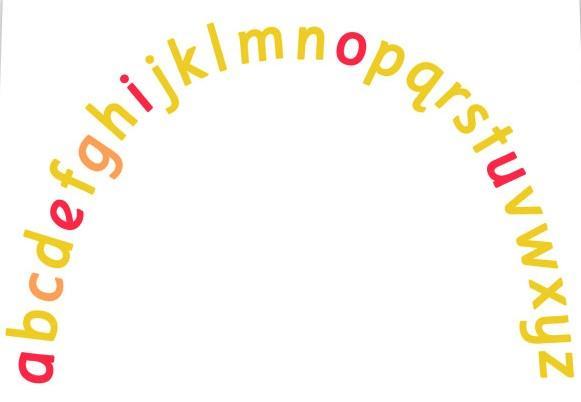
Children in EYFS will be familiar with the visual of an alphabet arc, this will support their awareness of the alphabetic code. During phonics lessons, the children are taught the sound for each letter and these are used within an alphabet arc to spell new words.
Word reading is important and from Unit 3 onwards of the Initial Code, children will bring home flashcards of high frequency words to learn. High frequency words often have more complex spelling patterns, however because they are frequently used in texts it is important that children become familiar with them sooner than when that spelling pattern is to be taught. This method will enable children to become fluent readers more quickly and will support their independent reading and fluency development.
Single grapheme flashcards will be sent home for children to practise once they have been taught in school. Parents are encouraged to practise these daily with their child to ensure they are confident in recognising and naming the sound.
The Extended Code progresses through Units from 1 to 50, covering phonics teaching in Year 1 and in Year 2. In the majority of the Units, children are introduced to a sound and then learn the most common spelling patterns that make that sound. In Year 2 those sounds are revisited and more phonemes are taught (text in green are the ‘more spellings’ for a sound, these are taught in Year 2.
e.g.
/ae/ /ee/ /igh/
ai e igh
a-e ea y
ay ee ie
ea y i-e
ey ey i
ei ie
eigh i
a
As children become more familiar with vocabulary and spelling through their fluency in reading, their ability to select the correct spelling pattern in their writing will rapidly increase.
Children in KS1 will continue to learn high frequency words through rapid recall. These will be sent home as flashcards to support fluency development.
Free Online Training Course for Parents
Parents are encouraged to complete the free Udemy training which will guide them in how to support their child with the Initial Code and acquiring all the skills and knowledge for reading.
The links to this are: www.udemy.com/course/help-your-child-to-read-and-write/ for Initial Code Units 1-7
and www.udemy.com/course/help-your-child-to-read-and-write-part-2/ for Initial Code Units 8-11
Book Bags
All children must bring their reading book to school every day. The best way to do this is in their book bag as it will protect the book and children can get into a routine of picking up their book bag each morning. All children will have a reading record book, these are affectionately known as their ‘Jungle Book’ at Monkshouse because of the colourful picture on the front cover. Staff will record in the Jungle Book when they have listened to the child read and will write a positive and constructive comment to support the parent when they are reading at home with their child. Parents are expected to write and sign in the Jungle Book every time they listen to their child read their reading book at home. Your child will come home with two books in their book bag. One book is a reading for pleasure book that your child has chosen from their class book corner. The other book is their reading book which has been closely matched to their phonics ability.
Supporting Your Child to Read at Home
Reading should be a pleasurable experience. Encourage your child to enjoy their reading reading book by talking positively about the text, praising your child for good reading and by discussing the text that has been read. Below are our 5 tips for successful reading development at home:
- Choose a time of day when both you and your child are able to spend time enjoying the book together.
- Turn off any background noises, including the TV and any music.
- When your child finds a new word more challenging to read at a glance support them by saying “say the sounds and read the word”
- To support your child in developing fluency and comprehension, read back what has already been read by your child up to and including the point where the error occurred.
- Praise and encourage your child for their efforts and celebrate their successes.
Your child must read their reading book at home at least 5 times a week. It is important that children have the opportunity to read and re-read books because this is how different skills will develop. The first time your child reads the book they may have to sound out and blend some of the words with recently taught sounds in. Most of the words should be familiar to your child and they will have a degree of fluency to their reading, reading most words quickly, at a glance.
When your child is faced with a more challenging word, ask them to “say the sounds and read the word.” This will encourage your child to segment the word and then blend the sounds together to hear and read the word. Occasionally your child may find this too challenging, in that instance say to your child “in this word(e.g. bread), these letters (point to the letters ea) make the sound /e/” This will teach your child that sound and support their phoneme awareness. It will have a positive impact on their fluency and comprehension. Once children are more familiar with the sounds they are learning, they should be able to read the text with greater fluency which will lead onto the development of expression in reading and then greater understanding (comprehension) of the text.
If you have any questions about your child’s reading book or phonics lessons, please speak to your child’s class teacher.
The Phonics Screening Check is a statutory assessment undertaken by all children in Year 1 in the summer term. It checks that children have reached the expected level of development in phonics needed for reading and writing. If the expected level is not attained, or a child is absent, they will complete the check in Year 2.
The following presentation was shared with parents at the recent phonics meeting. Please speak to your child’s class teacher or Mrs Kay, the Phonics Lead, if you have any questions.